The trend is now well-documented: in certain food categories—dietary products, supplements, and health and nutrition—brands are focusing a growing share of their advertising spending on Amazon rather than on traditional retailers’ advertising networks. The Kantar Media barometer on Amazon’s retail media search, reported by Linéaires, confirms this: Amazon Ads now generates over $68 billion in annual advertising revenue, and in 2026, Kantar Media launched the first independent monitoring of retail media search on the platform—proof that the marketplace has become a benchmark in its own right for marketing teams. For major food retailers, this signal must be taken seriously—not to copy Amazon, but to understand what it reveals about consumer behavior, and how the next technological disruption is changing the equation.
Why Amazon Attracts Food Brands' Budgets
The answer lies in three factors: purchase intent, data, and measurability. A consumer searching for “plant-based protein” or “magnesium supplements” on Amazon is in active buying mode. Over the years, the platform has built an advertising tool directly linked to this signal of intent—with nearly immediate ROAS attribution. In contrast, the formats offered by some traditional retail ad networks have remained more generic, less integrated into the actual shopping experience, and less equipped to measure performance on a per-unit-sold basis.
This isn't inevitable: it reflects a mismatch between changing demand and current supply. And that mismatch is being resolved—through a shift far more profound than simply catching up in search.
The real playing field is shifting: from research to the agent
The data presented at Shoptalk Europe 2026 (Barcelona, June 2026) makes it clear: retailers that have already integrated chatbots into their online shopping experience have seen their traffic from AI-powered platforms increase eightfold and their order volume increase thirteenfold, according to Shopify’s metrics. eMarketer projects that AI platforms will account for $20.9 billion in retail spending in 2026—nearly four times the 2025 level. This is no longer a faint signal.
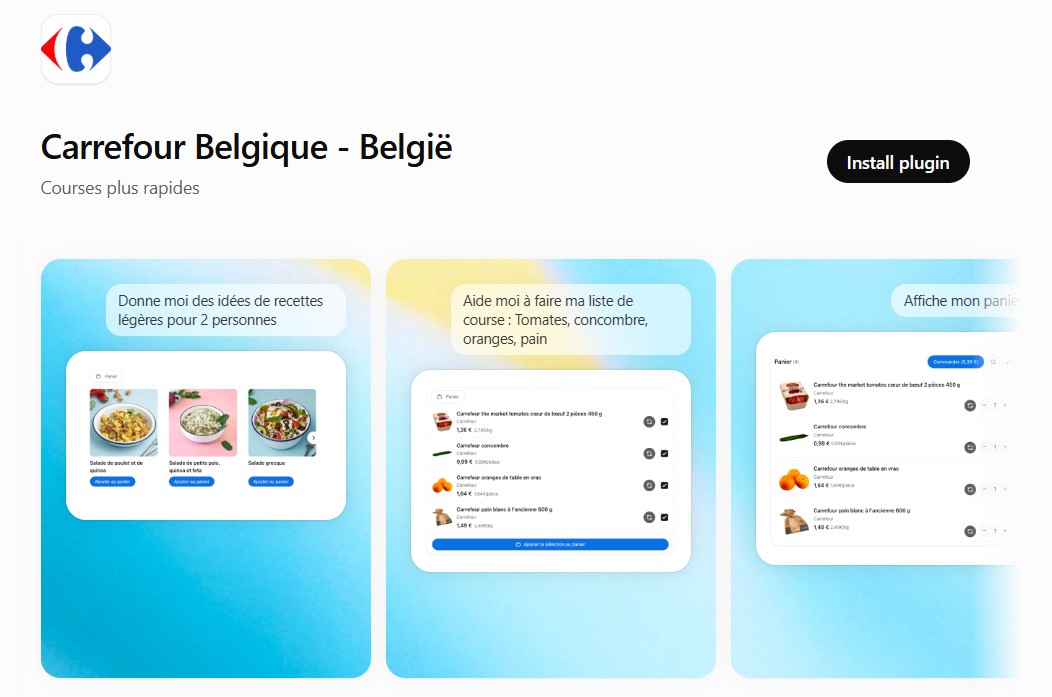
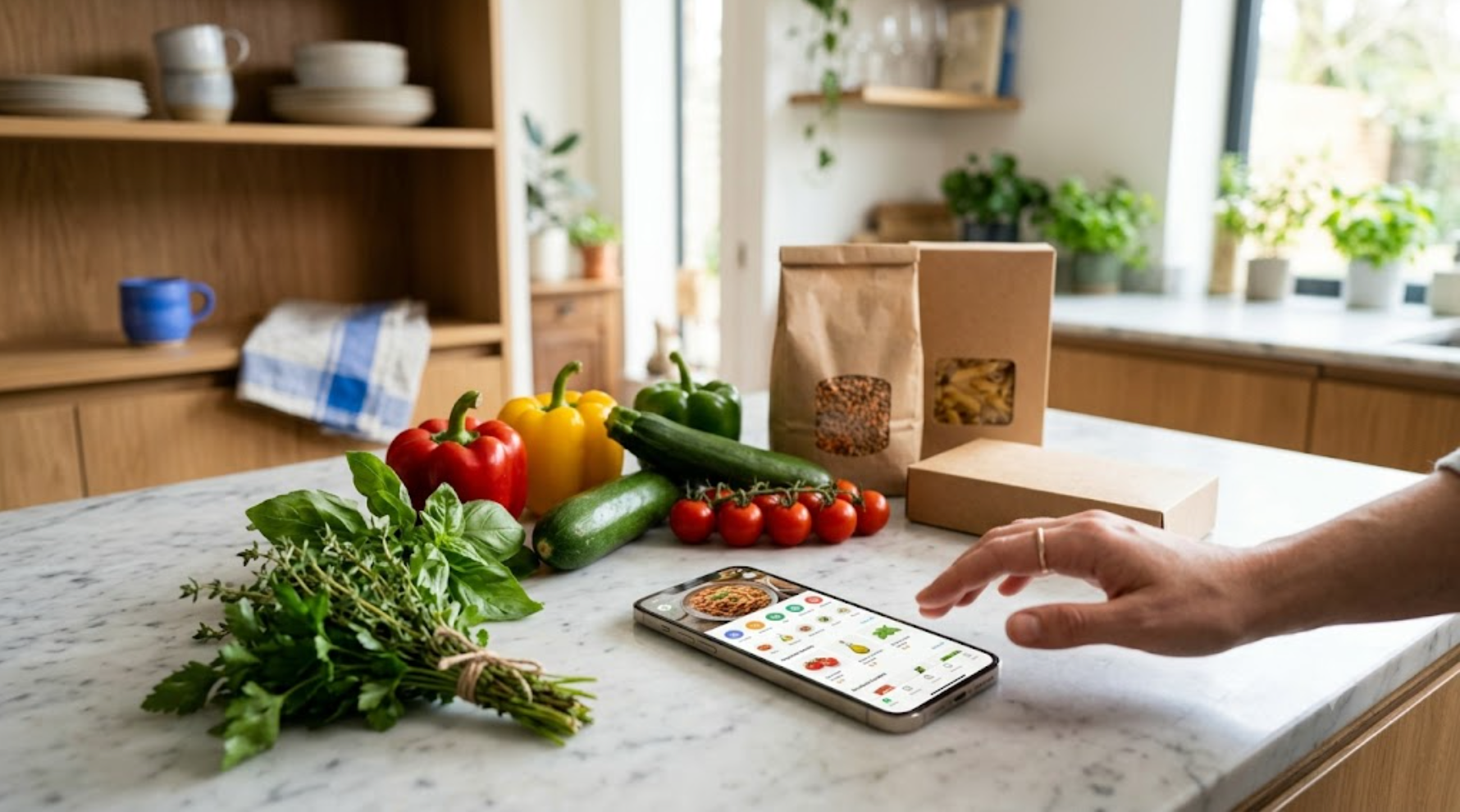
The reason is structural, and it directly affects the comparative advantage of food retailers. An AI agent doesn’t think like a search engine. When a consumer tells it, “I want to cook a vegetarian meal for four people tonight,” the agent doesn’t return a list of links: it suggests a recipe, identifies the necessary ingredients, and—if the retailer has granted it access to its catalog—adds the items directly to the shopping cart. This journey—which begins with a desire and ends with an order—is precisely where contextual retail media outperforms performance-based keyword advertising. A product suggested at the right moment, within the right culinary context, is infinitely more valuable than a winning bid on a generic keyword.
This is where food retailers have a structural advantage over Amazon: they know their customers, their shopping habits, their delivery areas, and their order history. The challenge now is to leverage this advantage within an agent-based infrastructure.
MCP and GEO: Two Practical Tools for Entering the Era of Agents
The good news is that the infrastructure already exists. The Model Context Protocol (MCP) has established itself as the standard that allows an AI agent to access a product catalog, check availability, and trigger an addition to the shopping cart—without requiring specific development for each platform. Microsoft integrated it into Dynamics 365 Commerce in June 2026; Shopify deploys it by default in every store on its platform. For a grocery retailer, publishing an MCP connector is like opening a storefront in AI agents’ stores—just as a mobile app establishes a presence on the App Store.
This first lever—the MCP connector—is inextricably linked to a second one: GEO (Generative Engine Optimization). Whereas traditional SEO optimizes URLs ranked in a list, GEO structures product data, recipe cards, and editorial content so that a generative engine can cite, synthesize, and present them directly in a response. Gartner predicts a 25% decline in traditional search volume by 2026–2027, as AI agents increasingly intervene earlier in the customer journey. For food brands, being visible within an AI agent that assembles a shopping cart offers advertising value that is incomparable to bidding on a keyword.
Conclusion
Food retail media isn’t going away—it’s evolving. Brands that are currently focusing their budgets on Amazon Search are doing so because it’s the most effective tool available for capturing immediate purchase intent. But tomorrow’s purchase intent will first take shape in a chatbot, based on a recipe or a craving, before landing on a website. Retailers who are investing now in their chatbot infrastructure—a GEO-optimized structured catalog, an MCP server open to chatbots, and a chatbot experience on their own website—are not just securing advertising positions; they are building the food retail distribution channel of the future. This is precisely where Mealz its retail partners.