For twenty years, the issue of online visibility boiled down to a single question: Where does your website appear in Google’s search results? That question hasn’t gone away, but it’s no longer the only one that matters. A growing number of consumers no longer “search” for a product in a list of links: they ask a conversational search engine, which responds with a summary and, increasingly, with a direct suggestion. The Shoptalk Europe 2026 report put it bluntly: the battle for visibility is shifting toward AI engines. For a food retailer, this shift opens up a new frontier that has yet to be fully explored in France: GEO, or Generative Engine Optimization.
Traffic no longer has to be sought out—it comes on its own
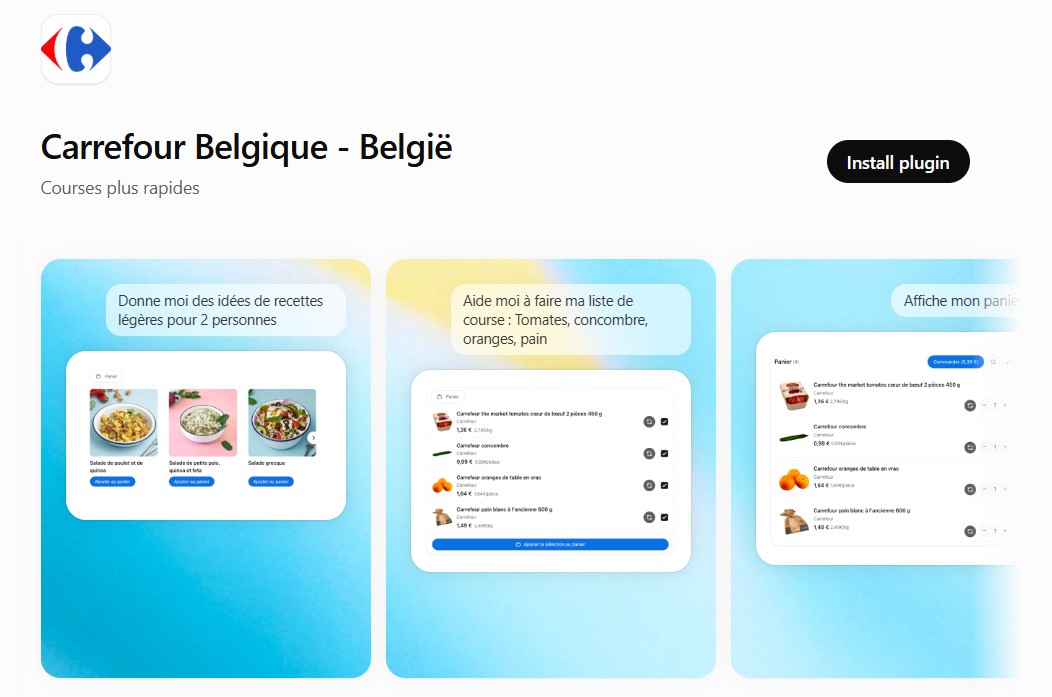
These signs are no longer just anecdotal. According to eMarketer, nearly one-third of the U.S. population will use a generative search engine by 2026, and traffic from these sources to e-commerce sites has become the fastest-growing acquisition channel. On the supply side, the tools are being rolled out at a rapid pace: Salesforce has made its Agentforce Commerce offering generally available and now allows users to connect a product catalog directly to ChatGPT, with an extension to Google Search, its AI Mode, and the Gemini app announced for the coming months. The company claims that AI-referred traffic converts eight times better than traffic from social media. In other words, your storefront is no longer limited to your website—it now extends to the places where purchasing conversations take place.
The downside is less encouraging. When a generative model responds directly, it often returns only a handful of products or brands. Whereas the first page of Google used to offer ten results, a response from an agent sometimes offers only two or three. Visibility becomes a more concentrated game: you’re either mentioned or you’re not.
GEO isn't just SEO in disguise
It would be tempting to view GEO as simply an extension of traditional search engine optimization. That’s a mistake in scale. SEO optimizes a page so it ranks higher; GEO structures information so it can be understood, cited, and—in the case of commerce—directly acted upon by a machine. The mechanisms are not the same. A study conducted by researchers at Princeton, Georgia Tech, and the Allen Institute for AI shows that the presence of statistics, cited sources, and verifiable factual information increases the likelihood that content will be included in a generative response by 30 to 40 percent. Meanwhile, an analysis of the pages actually cited by AI systems reveals that a large majority rely on structured data: tagged catalogs, comprehensive product attributes, and machine-readable formats.
For a retailer, this boils down to one simple thing: the quality and structure of your product data are now a factor in visibility, just as the title tag used to be. An AI agent can only “see” what it can read clearly.
The food industry has a trump card: data
This is precisely where food retailers have an advantage that they often underestimate. The decision to buy groceries rarely stems from a specific product in mind—it stems from a craving, a meal to prepare, a budget constraint, or dietary restrictions. Yet this is exactly the kind of information a generative engine seeks to draw upon to answer questions like, “What can I cook tonight for four people that’s gluten-free and won’t break the bank?” A well-structured recipe card, detailed nutritional information, listed allergens, and clear seasonal information—all of these elements make a catalog not only visible but truly recommendable by a search engine. Conversely, a catalog lacking in these attributes will remain invisible at the very moment the decision is made.
The Food GEO is therefore not a public relations exercise, but rather in-depth work on the data: ensuring it is complete, reliable, structured, and designed to be read by both machines and humans. It is an unspectacular investment, but it is this work that will determine who appears in the response—and who does not.
Conclusion
Online visibility is undergoing a transformation, and the timeline is tightening: catalogs are already integrating with generative AI engines, and the gap will quickly widen between retailers who have structured their data for this purpose and those who have left it as is. GEO isn’t yet second nature in France; that’s precisely what makes it an opportunity. At Mealz, we help retailers turn their food data and recipes into an asset that AI agents can read and recommend. The first step costs nothing: look at your own catalog through the eyes of a generative engine, and ask yourself if it would have enough to suggest you.