A statement from a public authority doesn’t often make headlines in the e-commerce world. However, the oneissued bythe Competition Authority on July 17, 2026, is worth taking a closer look at. Its president, Benoît Cœuré, sums up the issue in a single sentence: AI is rapidly reshaping the landscape—including in terms of competition—across a number of sectors. For the food retail sector, this is not an abstract concept. It is a specific warning about what is at stake when part of the purchasing journey shifts to chatbots that the retailer does not control.
A market already dominated by three players
The key figure in the opinion is unambiguous: three players—OpenAI, Google, and Anthropic—currently control more than 84% of the AI agent market. The Authority sees this as a risk of “platformization” of the sector—that is, a concentration that could, over time, reduce the diversity of offerings and give a few platforms disproportionate power over how consumers discover and choose their products. The actual e-commerce traffic redirected by these agents remains limited for now—below 5% in France—but the agency anticipates a rise to 20–25% by 2030. By that time, an AI agent would play as significant a role in customer acquisition as SEO or a marketplace does today.
Self-serving bias, lack of transparency, data loss: three concrete risks
The opinion outlines risks that directly affect retailers. The first is the risk of self-preferencing: a vertically integrated player could, in its agent’s responses, favor its own services or the most profitable partnerships, without the consumer knowing whether the recommendation is based on price, availability, reviews, or a commercial agreement. The second risk is data loss: if the purchase is completed within the agent’s interface rather than on the retailer’s website or app, the retailer loses visibility into the customer journey, hesitations, and repeat purchases—all of which currently fuel CRM and personalization. The third, more technical issue relates to the standards themselves: agent-based commerce relies on protocols that allow an agent to interact with a product catalog, a payment method, or a logistics solution. If these standards are set by a limited number of players, retailers will have to adapt to rules they did not define.
The right answer isn't to just put up with it—it's to stay in control
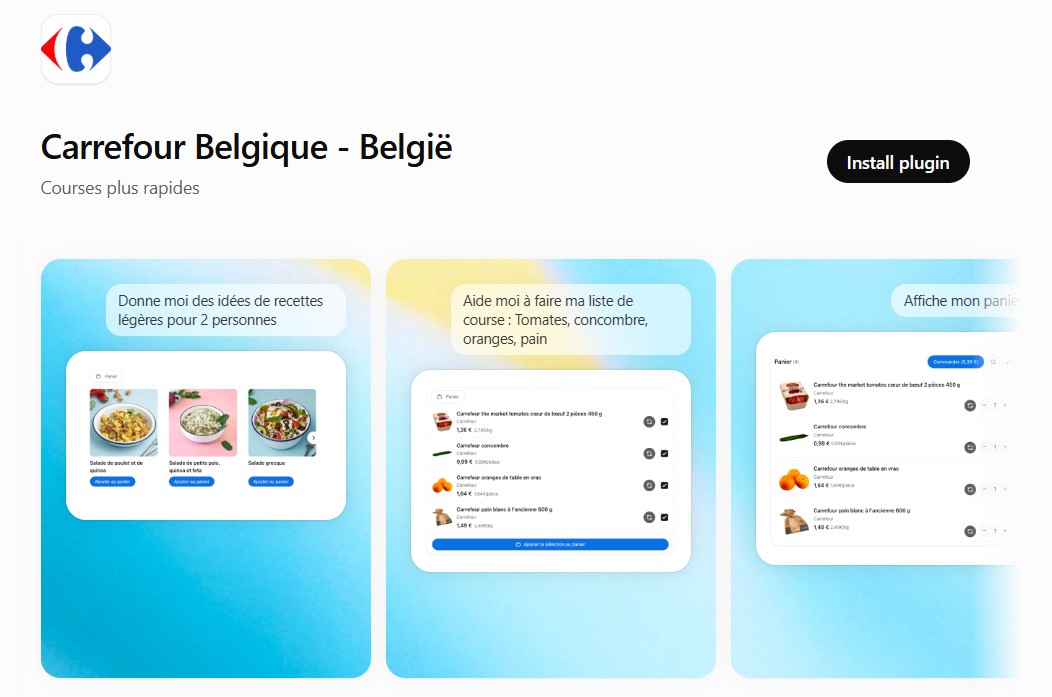
This is precisely where Mealz core conviction lies. Faced with an AI agent market already concentrated in the hands of just three players, the question is no longer whether part of the food shopping journey will go through a conversational agent—it will. The real question is which agent will fill that role. Allowing a third-party general-purpose assistant to come between the retailer and its customer means automatically accepting the three risks highlighted by the Authority: opaque ranking, loss of the customer relationship, and dependence on rules set elsewhere. Giving the retailer its own white-label chatbot—integrated into its customer experience and connected to its own data—means, on the contrary, maintaining control over visibility, ranking, and customer data at the very moment they come into play. This is not a defensive stance: it is the most direct way to address, right now, the risks that a regulator has just identified.
Conclusion
A ruling by the Competition Authority doesn’t change anything overnight. But it serves a useful purpose: it identifies risks that many retailers had sensed but hadn’t yet formalized, and it serves as a reminder that a still-young market is rapidly taking shape, sometimes to the benefit of a limited number of players. For the food retail sector, the window of opportunity to take proactive action rather than face a fait accompli is still open. At Mealz, that’s what we’re building with retailers: a platform that belongs to them, rather than a channel they don’t control.